
Living Green, Living Well: 5 Ways People with Disability Can Embrace Sustainability
For a long time, sustainability felt like a conversation that wasn't for me. Here's what changed when I found a version of it that actually fit my life.
I have spent a lot of my life feeling like the world was not quite designed with me in mind. Doorways were too narrow, instructions too complicated, and systems assumed a level of ease I have never had. So when people start talking about sustainability, composting, zero waste, and cycling to work, I will be honest with you: for a long time, my first thought was that the conversation was not for me.
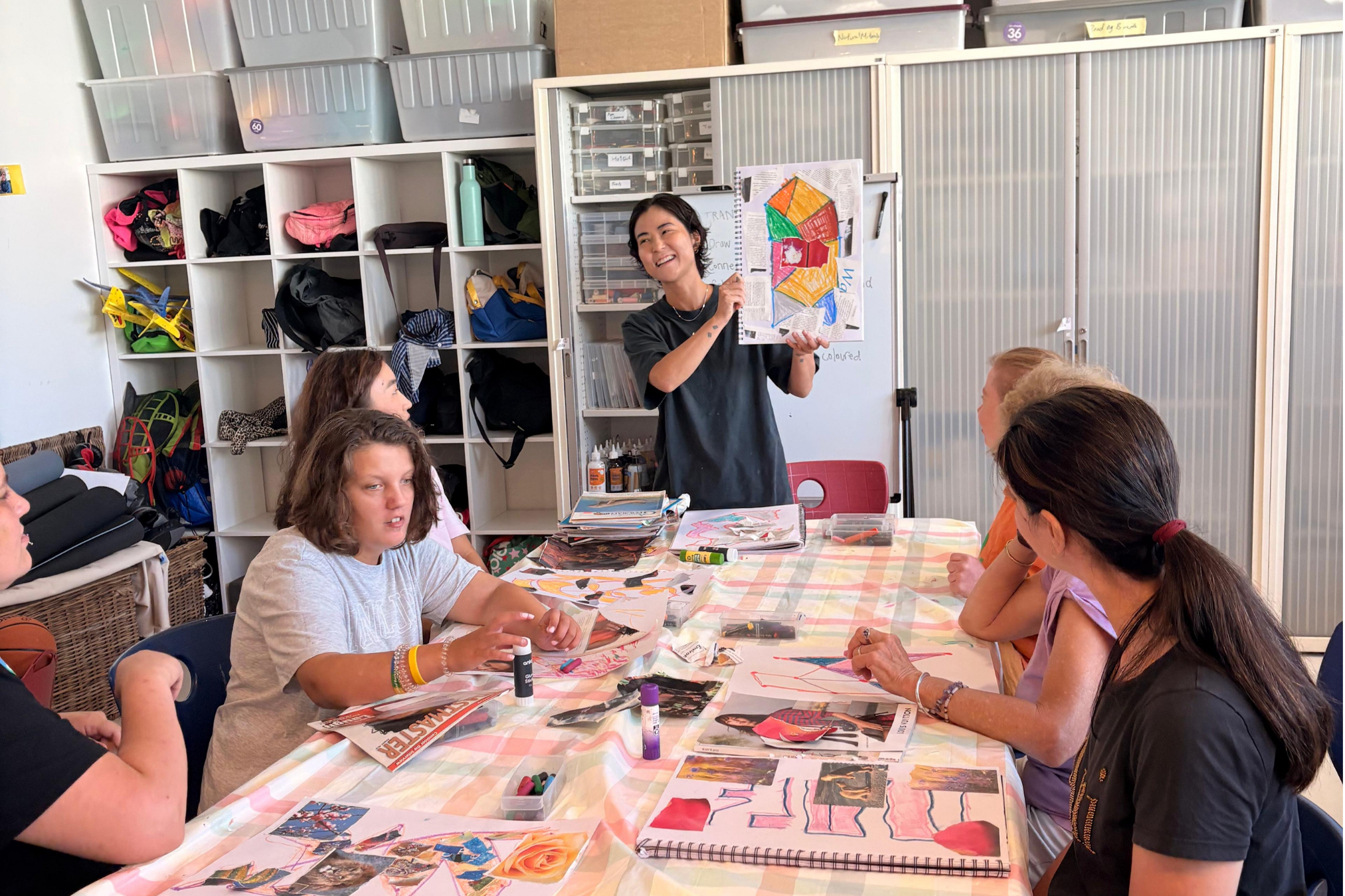
But then something shifted. It happened the morning I walked through the gates of Annabel House at the Randwick Sustainability Hub for the first time as a participant at One&All Hub, and I realised that sustainability does not have to look like what you see on Instagram. It does not have to be a 5am farmers market run or a perfectly curated linen wardrobe. It can be a group of people with mixed abilities sitting around a table, making something beautiful from fabric that would otherwise end up in a landfill. It can be a wicking bed full of vegetables grown by hands like mine.
When One&All moved into Annabel House at the Randwick Sustainability Hub, it felt fitting. Surrounded by permaculture gardens, food forests and native habitats, the space reflects something One&All has always believed: thriving and caring for the world can happen at the very same time. Those of us who attend One&All's holistic services already live by that idea every week.
So, from someone who has been there, here are five genuine, accessible tips for people with disability who want to live more sustainably. No perfection required.
1. Repurpose Before You Replace
One of the most powerful things I have learned at One&All is that what we tend to throw away still holds value. Fabrics headed for landfill become handwoven art pieces in our ‘Weave & Breathe’ workshop. Donated textiles get a second life in our programs. Old items arrive at One&All through business partners and leave as something a participant made by hand.
At home, you do not need a special skill set to do this. A worn pillowcase becomes a shopping bag. An old jar becomes a planter. If executive function or fine motor challenges make upcycling feel out of reach on your own, this is exactly the kind of creative, capacity-building activity a
good day program should support you through. One&All's visual arts and crafts workshops are built around this kind of thinking, and the results are genuinely beautiful.
2. Grow Something. Anything.
I know. Gardening sounds like an enormous undertaking, especially if your energy or mobility is limited. But I am not talking about a veggie patch the size of a football oval. I am talking about a single pot plant on a windowsill. A herb growing in a recycled tin on a balcony. The therapeutic act of pulling weeds.
The Randwick Sustainability Hub, right outside where One&All now calls home, has five permaculture demonstration gardens. Walking through them, even slowly, even with support, you realise that growing food does not have to be hard. We can manifest sustainability in our own way, such as by introducing wicking beds, self-watering garden beds that are an incredible option for people who find daily watering difficult, and raised beds that remove the need to bend down.
At One&All, vegetables grown in our urban garden go into our juice-making workshops, and that juice gets sold at our market days. The loop is complete. Growing something, even something small, connects you to that loop in a grounding way. For those of us who spend a lot of time managing health or navigating systems, there is something genuinely therapeutic about watching a seed become food.
3. Choose Secondhand First
Choosing secondhand is not a compromise. It is a powerful act that keeps things out of landfill, reduces demand for new production, and often costs significantly less.
For people with disability, secondhand shopping can look a lot of different ways. Online platforms like Facebook Marketplace, Gumtree or Vinnies Online mean you never have to navigate a crowded charity shop floor if that does not work for your body or your sensory experience. If you do love a browse in person, many op shops have started to make their spaces more accessible. And if choice overwhelm is a challenge, asking a support worker or trusted person to help you narrow down what you need before you look can make the whole thing feel manageable rather than exhausting, especially when you are trying to make a sustainable choice.
The philosophy at One&All is one of reuse and repurpose wherever possible, and it applies as much to the way we live outside the hub as it does inside.
4. Connect with Your Community
Sustainability is not just about recycling. It is also about social and environmental values working together. One&All's vision of sustainability is rooted in this: acts of kindness toward each other, the materials we choose to use, and the purposes for which we use them. That framing changed how I thought about my own role in the world.
Connecting with the community is, in itself, a sustainable act. When we share resources, skills and transport, we create new opportunities for sustainable living. For NDIS participants specifically, community participation activities can absolutely include sustainability-focused events. Workshops at the Randwick Sustainability Hub and community events hosted by One&All are meaningful, real-world connections that build both confidence and independence. Ask your support coordinator about funding activities that genuinely light you up, not just the ones that seem easiest to tick off a goal.
5. Use What You Have, Fully
Use what you have, fully, before you reach for something new. Finish the shampoo before opening another bottle. Eat the vegetables before they go off. Wear the clothes you already own, and let each choice lead into the next.
For people whose lives involve a lot of medical supplies, packaging, and equipment, there can be a particular kind of waste that feels unavoidable. And some of it genuinely is. But there are also small places where awareness helps. Where possible, look for suppliers who offer recycling programs for things like medical packaging. Ask your support worker or occupational therapist if any of your consumable supports could be swapped for more durable, less wasteful alternatives, so the small steps add up.
One&All's goal of being self-sufficient as an organisation mirrors this beautifully. The income from our social enterprise goes back into the workshops and activities that support participants. Nothing is wasted. Everything serves a purpose, and that same principle can guide the way we think about our own lives. That is a principle we can all carry into our own lives in small and meaningful ways.
A Final Thought
Sustainability in the disability sector is not talked about nearly enough. Our voices and our needs often go unheard, yet we prove to be creative, resourceful, deeply community-minded people who know better than most how to do more with less, adapt, and find meaning in small things. Those are, as it turns out, exactly the qualities the world needs more of right now.
At One&All, nestled in the heart of the Randwick Sustainability Hub, participants are empowered to create, move, socialise, up-skill and feel celebrated every week. Walking out of Annabel House after a day at the hub gives me a spark of joy I cannot find elsewhere. That feeling of being inspired, safe, fulfilled, and respected is where sustainable living begins.
One&All Hub is a dynamic day service and holistic workshop hub for NDIS participants with mixed abilities aged 18+, now located at Annabel House, 21 Munda Street, Randwick NSW 2031, within the Randwick Sustainability Hub. To learn more or book a trial session, visit oneandallhub.org.
Discovering Dignity in Day Programs: What a Good Day Program Actually Looks Like
A good day program is more than activities on a schedule — it's about respect, choice, and genuine connection. Here's what dignity actually looks like in practice.
I have cerebral palsy. I've had it my whole life, which means I've also had a whole life of well-meaning services telling me what's good for me. So when I say I've sat through a lot of day programs, I mean I've sat through the version where "inclusion" was a poster on the wall and nothing else. I've sat through the version where staff spoke over me to my support worker, as if I wasn't in the room. I've also, more recently, sat through the version that actually worked. That contrast is the reason I'm writing this.
There's a particular kind of exhaustion that comes from being cared for without being seen. Nobody's being cruel. It's just a room full of adults being managed instead of met. If you've lived it, you know the difference the second you walk into somewhere new. Your body clocks it before your brain does.
So what actually separates a good day program from one that's just filling hours?
So glad you asked! Well, firstly, it treats capacity building and care as the same thing, not a trade-off. Too many services quietly split people into two categories: those who get "programs" and those who get "supervised." Mixed-ability groups are treated like a scheduling problem rather than a design opportunity. But disability isn't a single experience. Someone might need physical assistance to hold a paintbrush and still have a fully formed creative vision they want to execute themselves. Those aren’t contradictory needs. A good program doesn't make you choose between being supported and being challenged. It figures out how to give you both.
It also gives people something to build, not just something to attend. There's a difference between a day filled with activities and a day that's building toward something. The programs that stay with me weren't the ones with the busiest calendars; they were the ones where I left with something I couldn't do the week before, or something I'd actually made that meant something to me.
Aside from creating something meaningful, the environment in itself does half the talking. Physical access is the most literal form of respect a building can offer. If I have to be lifted, redirected, or apologised to just to get through the front door, the program has already told me where I rank before a single staff member says a word. A well-designed space says, "we built this with you in mind" without anyone needing to say it out loud.
Then there are the staff who ask instead of assume. Good staff ask what you want, then actually wait for the answer, even if it takes longer to give it. Attempts to finish a sentence aren't helpful; they're patronising. The best support workers I've had treated my pace as normal, not as a delay to manage.
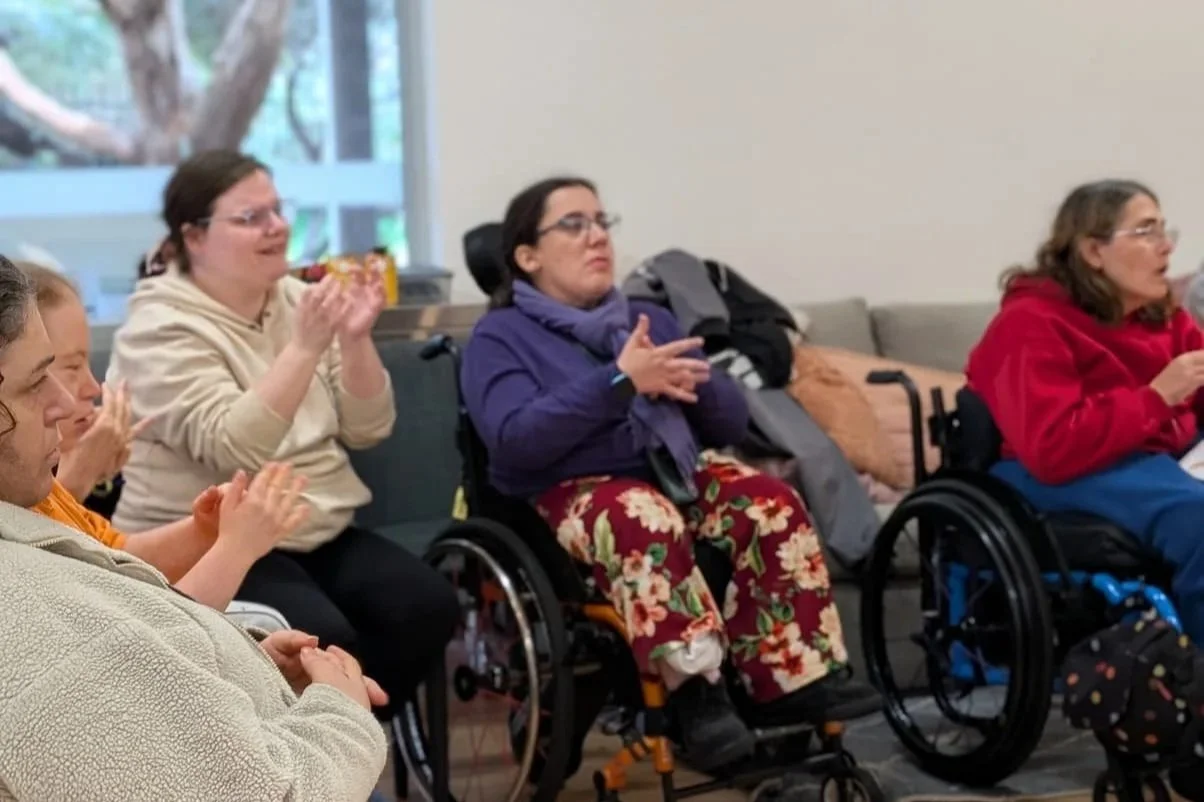
Those support workers are part of a community that fosters genuine social connection, not staff-manufactured "socialising time." It's the difference between a program that produces confidence and one that produces compliance. When people with different disabilities, communication styles and support needs are genuinely brought together, you stop being defined by your diagnosis and start being defined by your personality.
And it treats you like the adult you are.
Adults with disability are still adults. We have opinions, humour, bad days and ambition. A program that assumes competence first, rather than making you prove it, changes the entire emotional temperature of the room.
After years of looking, I've learned it's genuinely rare to find a day service that manages to hold you and push you at the same time. Most places pick a lane. Either it's all therapeutic and gentle, or it's all "empowerment" language with none of the actual scaffolding to back it up.
That's what led me to One&All Hub.
One&All describes itself as an inclusive community hub and day service for people with mixed abilities, and having spent time there, I can say the language isn't just branding. Their workshops span arts, wellbeing and life skills through their Program of Support, which is exactly the kind of dual approach I mean. You're not just kept busy; you're building capacity. The workshops are structured enough to give you something to hold onto week to week, but flexible enough to be designed around actual people rather than a rigid curriculum.
What struck me most was the language they use around what people are there to do: create, move, socialise, up-skill and feel celebrated. Sitting in that space, it tracked. There's a real effort to make people feel inspired, safe, fulfilled and respected, not as a mission statement on a website, but as something that shapes how a Tuesday actually unfolds.
If you're anywhere across Sydney's eastern suburbs, my advice is to start with a Trial Session if the service offers one… One&All does! It's the fastest way to tell whether a place matches its own language. Watch how staff talk to participants, not about them. Watch whether the room genuinely includes people with a range of support needs, or whether "mixed abilities" is just a phrase for the funding paperwork. And trust your body's read on the space. Mine has never once been wrong.
Adults with disability deserve dignity as a baseline, not a bonus. That's the whole argument. A good day program doesn't have to be complicated. It has to treat the adults in the room as adults, full stop. Everything else—the workshops, the accessible building, the structured support and the trial sessions—is simply the practical scaffolding underneath that one basic idea. Places like One&All manage to hold that idea and act on it at the same time, which is why they're worth naming.